EV charging is one of the biggest line items in a home electricity bill, up to 30 to 50 euros a month on top of your usual usage. But can you really cut that amount in half just by changing when you charge? If you're on a spot electricity tariff, the answer is yes, and in this article we explain how it works in practice, how much you can save, and whether it's simple enough to do without any technical knowledge.
Why Is EV Charging So Cost-Sensitive?
EV charging uses far more electricity than any other appliance in the home. Even a relatively small charger, at 7 kW, can draw 20 to 35 kWh over a single night, depending on the state of the car's battery. That's more than an average family's daily electricity use for the rest of the home.
That's exactly why charging time matters more than for any other device in the house. If you charge in the evening, when spot prices are high, you pay the maximum price for the maximum amount. But between 1am and 6am the price is often 3 to 6 times lower, and the car's battery couldn't care less which hour it's charged in.
What's the Real Difference Between Hourly Prices?
On the Nord Pool electricity exchange, prices in Latvia change every hour and can swing very widely. On a typical winter day, evening hours (6pm-9pm) can cost EUR 0.15 to 0.25/kWh, while night hours (2am-5am) are often EUR 0.03 to 0.07/kWh. Add taxes and distribution costs and the absolute price is higher, but the proportion stays the same.
You can check current Nord Pool electricity exchange prices for Latvia in the public price table, it shows exactly how big the gap is between different hours of the day.
Can My EV Even Be Connected to This Kind of Automation?
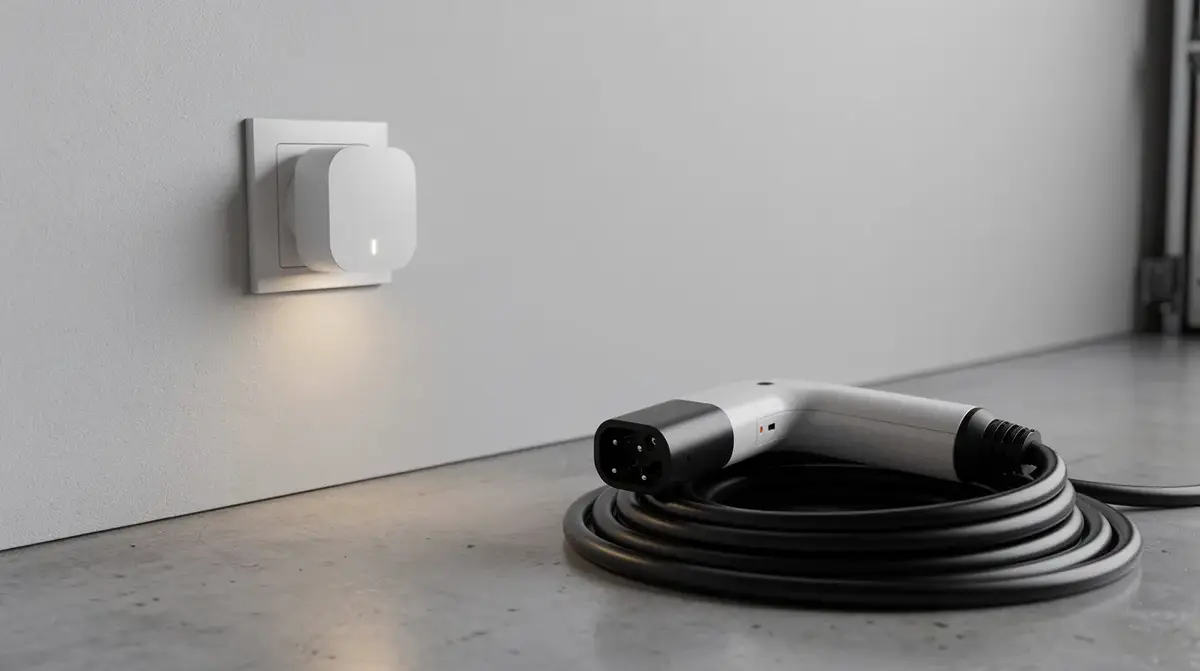
Most home chargers (wallbox-type units) plug into a standard socket or a dedicated distribution point, and that's exactly where automation works most simply. The Spotvolt smart plug controls the power supply to the charger: when the price is favourable, power flows; when the price rises or the cheap window ends, the supply stops.
It's worth understanding: the automation doesn't communicate with the car or the wallbox's internal systems. It simply controls whether the plug is switched on or off, exactly as you'd do manually yourself, just without having to wake up at 2am.
Which Chargers Does This Work With?
- Portable EVSE chargers that plug into a standard 16A socket
- Simple wallbox units whose power supply is controlled from the distribution side
- Any charger where the manufacturer's instructions allow automatic switching on and off
Watch out: Before installing automation, make sure your charger allows the power supply to be paused and resumed mid-charge. Most modern units support this, but some older models may have restrictions, check the user manual or contact the manufacturer.
How Much Can You Realistically Save Each Month?
Let's work it out concretely. Say you charge your EV every day and use an average of 20 kWh per day.
Scenario Without Automation: Charging in the Evening
If you charge from 6pm to 10pm, the average spot price during that window could be EUR 0.18/kWh. At 20 kWh a day, that's EUR 3.60, or roughly EUR 108 a month for charging alone (before distribution fees and taxes, the proportion stays the same).
Scenario With Automation: Charging at Night
If automation handles charging from 1am to 6am, when the average price is EUR 0.05-0.08/kWh, the same 20 kWh costs EUR 1.00 to 1.60, or roughly EUR 30-48 a month. The real saving is EUR 50 to 70 a month on the charging portion alone.
Charging an EV at night on a spot tariff can save more than any other household appliance, because consumption is high and the price gap is significant.
An EV is the device where automatic charging-time optimisation pays off fastest. Even with a moderate price gap, the annual saving can reach several hundred euros, which is exactly why it's one of the first things recommended to anyone on a spot electricity tariff.
How Does Spotvolt Automation Decide When to Charge?
The Spotvolt system receives the next day's Nord Pool electricity prices for Latvia every day and automatically plans which hours to switch the plug on. You don't have to do anything, no checking price tables, no setting an alarm, no remembering to change the charging time every evening.
There are several ways to configure the charging logic:
Cheapest hours mode
You specify how many hours a day charging needs, say, 5 hours. The system picks the 5 cheapest hours from the next day and switches the plug on exactly then. Simple and effective.
Cheapest hours window mode
If the car needs to be ready in the morning but charging must finish by a set time, say, 7am, this mode picks the cheapest hours within that specific window. Ideal if you commute to work daily and want a full battery in the morning at the lowest possible price.
Price threshold mode
If you want maximum control over costs, you can set a maximum price you're willing to charge at. For example: "only charge if the price is below EUR 0.08/kWh." The system switches on automatically whenever the price meets that condition.
Pro tip: The cheapest hours window mode is ideal for anyone who leaves their car charging overnight. Set the charging window from 10pm to 7am and specify how many hours you need, automation does the rest, choosing the cheapest hours within that period.
Are There Cases Where Automation Doesn't Work Well Enough?
Automation works best when charging time is flexible. But there are situations worth weighing up separately.
Unplanned trips and a changing schedule
If you need a full battery sooner than usual on a given day, you can manually switch the plug on from the dashboard at any time. Automation is a helper, not a strict restriction, you're always still in control.
Very low battery
If the car's battery is nearly empty and you need to drive early the next morning, it's better to use manual charging or adjust the window settings for that specific night. A regular overnight charging schedule usually avoids these situations altogether.
Winter periods with higher prices
In winter, spot prices overall are higher, but the gap between night and day remains. Even if the cheapest hour in winter costs more than in summer, it's still considerably cheaper than an evening hour on the same day. Automation keeps working effectively during high-price periods too.
Watch out: A spot electricity tariff isn't always cheaper than a fixed one, it depends on the specific offer. If you're still weighing whether to switch tariffs, check the current Nord Pool electricity exchange prices for Latvia and compare them with your existing contract's rate.
How Do You Track Your Actual Consumption and Savings?
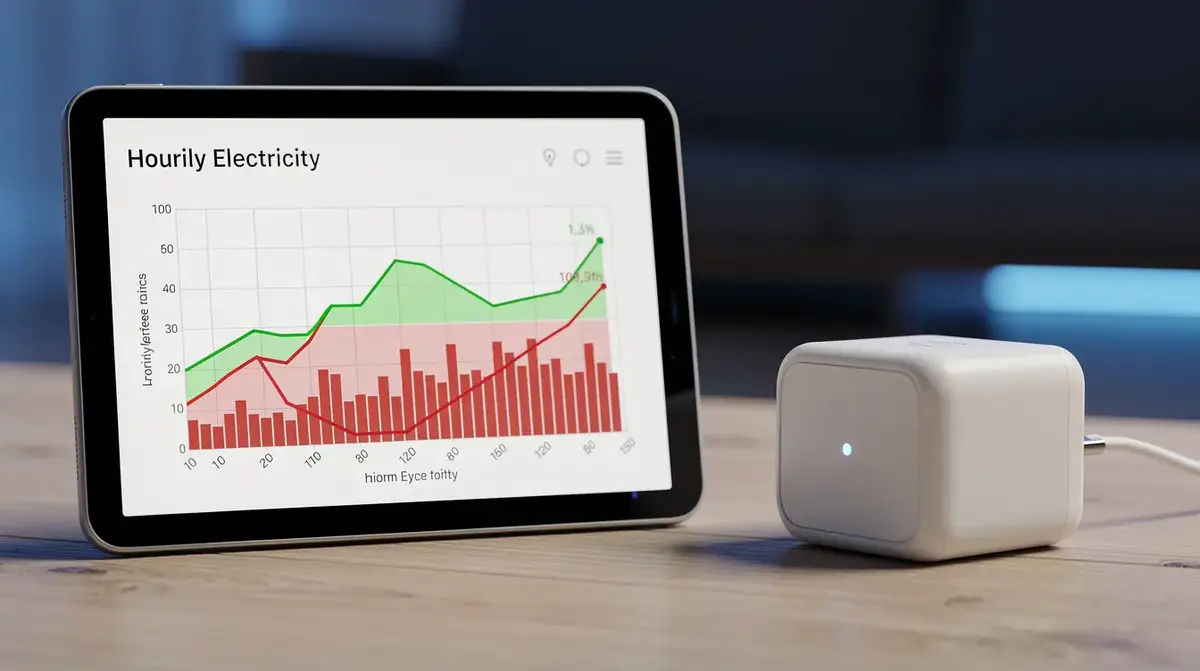
Saving is one thing, seeing exactly how much you've saved is another. The Spotvolt dashboard shows the plug's on/off history and consumption over time, so you can assess the real saving.
Through the Spotvolt dashboard you can view:
- The plug's switching history
- Electricity consumption by hour and by day
- Active automation settings
- Manual control options at any time
This lets you not only save money, but also understand when and how much you use, which on its own helps you make better decisions about your charging habits.
Pro tip: If your household has two cars, or you also have a water heater or dishwasher alongside EV charging at home, you can connect a separate Spotvolt plug to each device and optimise every large consumption item at once from a single dashboard.
How Do You Get Started, How Complicated Is Setup?
Setup is simple and requires no special technical knowledge. Plug the smart plug into a standard socket, log into the dashboard, choose the automation mode that suits you, and setup is done. Most users have everything configured in 10 to 15 minutes.
You don't need an electrician, special tools, or any programming experience. The system is built for ordinary home users, not technicians.
All available features, and a detailed explanation of how each mode works, can be found on the Spotvolt features page.
Who Benefits Most from EV Charging Automation?
This solution suits almost every EV owner on a spot electricity tariff, but it pays off especially well in these cases:
- Daily commuters, if you drive to work and back every day, the car sits at the plug long enough to make use of the cheap night hours
- Homeowners, if you have your own garage or driveway socket, installation is very simple
- Families with more than one car, if both vehicles charge overnight, the saving doubles
- People with a changing charging schedule, manual control from your phone lets you adapt quickly to any situation
Compared with other home appliances, automation pays off fastest for EV charging, precisely because consumption is high and the price gap between the cheapest and most expensive hours is significant.
If you have an EV and a spot electricity tariff, automatically optimising your charging time is one of the simplest ways to cut your monthly bill by 30 to 50 euros or more, every month, without any daily involvement on your part.
EV charging on a spot electricity tariff with automatic time optimisation genuinely pays off, and this isn't a theoretical calculation. The price gap between evening and night hours in Latvia is real, it happens every day, and it directly affects your monthly bill. If your car sits at the plug and you're on a variable electricity tariff, the chance to save exists tonight, you just need the right tools. Take a look at the Spotvolt product and find out if it suits your situation.