Does a spot electricity tariff really pay off for an ordinary Latvian family? It's a question many people ask before switching to a variable tariff. There's no single answer, but with the right calculations and a bit of automation, most households can save EUR 150 to 400 a year, without major changes to daily life. In this article we look at real examples, concrete figures, and which families gain the most from this tariff.
Why does a spot tariff save you money in the first place?
A spot electricity tariff means you pay exactly what electricity costs on the Nord Pool exchange each hour, not a fixed price around the clock. In Latvia, the hourly electricity price can vary by three to five times: during the night or when wind generation is high, the price can drop to just 1 to 3 cents per kWh, while during the evening peak it can reach 15 to 25 cents or more.
For families using 400 to 600 kWh a month, that difference matters a great deal. If a water heater warms your water at night for 2 cents instead of 18 cents at midday, the saving from that one appliance alone can reach EUR 10 to 18 a month. Multiply that by twelve months and add the savings from a washing machine, a dishwasher and other appliances, and the numbers become significant.
It's important to understand that most of the saving doesn't come from using less electricity, but from using it when electricity is cheaper. That's exactly what Spotvolt's automation does on your behalf.
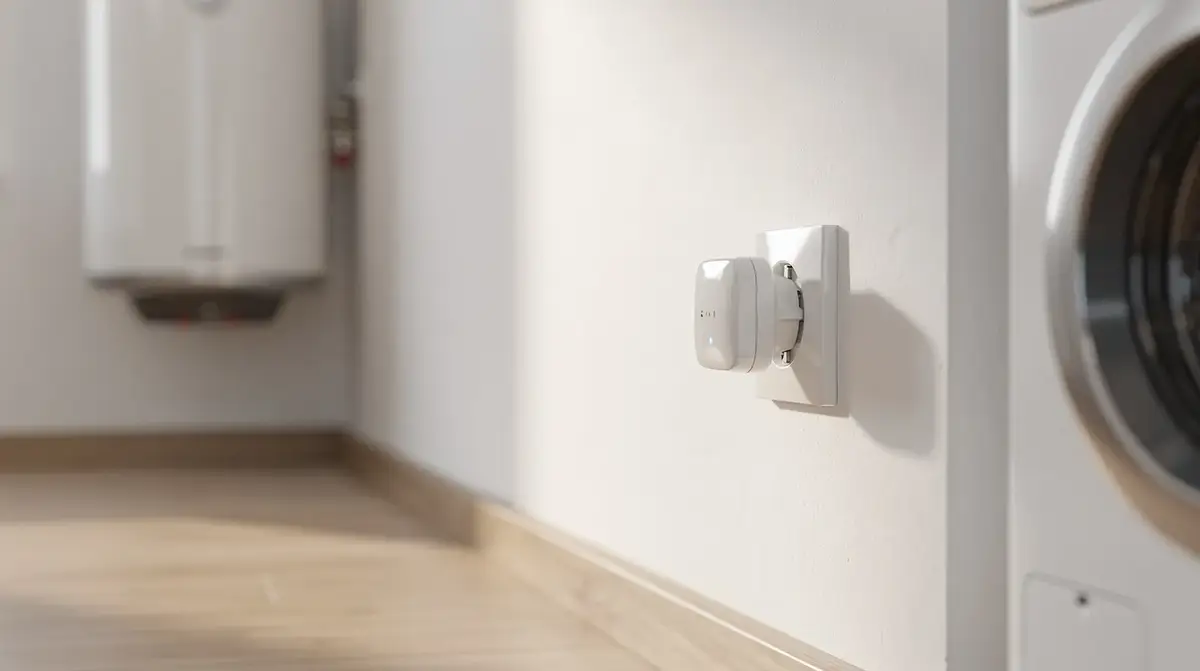
A spot electricity tariff saves you money not by cutting your consumption, but by shifting it to cheaper hours. The more high-power appliances you have, the greater the potential gain.
Which families benefit most from a spot tariff?
Not every household benefits equally. The biggest savings go to families with at least one, or several, of these appliances: an electric water heater, a washing machine, a dishwasher, an electric heater or an electric car.
A family with a water heater: the classic example
Electric water heaters are among the biggest sources of consumption in a home, typically 2 to 3 kW. For a family with an 80 to 100 litre water heater that warms water every day, this comes to roughly 3 to 5 kWh a day. If automation schedules that consumption for the night, when the spot electricity tariff is at least three times lower, the saving from the water heater alone can be EUR 8 to 15 a month, or EUR 100 to 180 a year.
A family with an electric car
Charging an electric car is one of the biggest sources of consumption, 8 to 15 kWh per charge. For families who charge their car 4 to 5 times a week, switching from evening charging to night charging can save EUR 20 to 40 a month. That's EUR 240 to 480 a year, from a single appliance. Read more on this topic in EV Charging on a Spot Tariff: Does It Pay Off?
A family with several household appliances
If your home has a water heater, a washing machine and a dishwasher, the combined potential saving can reach EUR 200 to 350 a year. For these families, a spot electricity tariff combined with automation is especially worthwhile.
How much does each appliance actually save?
Let's look at real calculations based on typical Nord Pool electricity prices in Latvia and average appliance consumption.
- Electric water heater (80-100 l): 3-5 kWh/day. Shifting it to night hours at around 2 ct/kWh instead of around 15 ct/kWh saves roughly EUR 120-180/year.
- Washing machine (90°C wash): 1.5-2 kWh/wash. 3-4 washes a week. Shifting to a cheap morning or night period saves EUR 30-60/year.
- Dishwasher: 1-1.5 kWh/cycle. 5-6 times a week. Saving with automatic scheduling: EUR 20-40/year.
- Electric car (mid-range): 8-15 kWh/charge. Regular night charging can save EUR 200-400/year.
- Electric radiator or heater: 1-2 kW output. Limiting operation to cheap hours during winter months saves EUR 40-80/year.
Pro tip: If you have a water heater and an electric car, these two appliances alone can save EUR 300-500 a year with a spot electricity tariff and automatic scheduling. That's already a strong argument for switching.
An average Latvian family with a water heater and two household appliances can save EUR 150-250 a year, simply by shifting consumption to the cheapest hours.
When is electricity cheapest, and how do you use that?
In Latvia, the hourly electricity price is lower overnight, roughly from 23:00 to 7:00, and also at weekends and on public holidays. But spot prices change every day, and the ideal hours aren't the same each day. They depend on wind and solar generation and on consumption across the Baltics and the wider Nordic region.
That's exactly why tracking prices manually is such a hassle. Hardly anyone wants to check tomorrow's prices every morning and decide by hand. Spotvolt's automation does this automatically: the system re-analyses Nord Pool electricity prices every day and switches your appliance on exactly when it's most worthwhile.
You can check the current Nord Pool electricity prices yourself too, it's publicly available information. But reacting to them automatically, every day, for every appliance, is what the system takes care of.
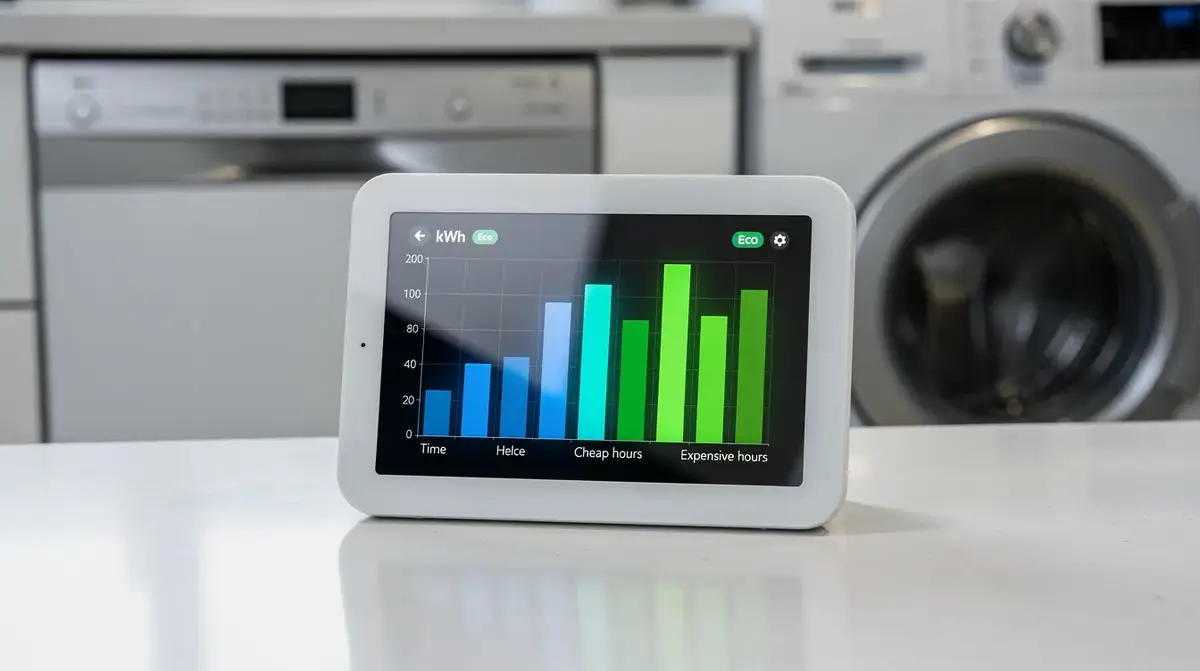
Careful: A spot electricity tariff without automation gives you a much smaller benefit. If you don't change your consumption habits, you could even end up paying more than on a fixed tariff, especially in winter, when prices are volatile. Automation is what makes the switch genuinely worthwhile.
Which automation modes save the most?
Spotvolt offers several automation modes, and each one suits a different use case. Choosing the right mode has a real effect on how much you actually save.
Cheapest hours mode
Suited to appliances without a strict schedule, such as a water heater or a washing machine. The system picks the cheapest hours of the day and automatically switches the appliance on exactly then. It's the simplest and most popular way to start saving.
Price threshold mode
You set the maximum price you're willing to pay to run the appliance. If the spot price is below that threshold, the appliance runs. If it's higher, the system automatically switches it off. Ideal for heaters, or for situations where you want full control over what you pay.
Cheapest hours window
If an appliance needs to run within a specific time period, for example a washing machine that must finish by 8:00, this mode automatically picks the cheapest hours within that window. That way you get both the saving and the convenience.
You can read a full comparison of all Spotvolt automation modes in Which Automation Mode Suits Your Appliance?
There's no single mode that fits every appliance. A water heater usually suits cheapest hours mode, EV charging suits an hours window, and a heater suits a price threshold. Spotvolt lets you set the most suitable mode for each appliance.
How do you track how much you're actually saving?
One of the most common questions is: how do you know the automation is actually working and the saving is real? In the Spotvolt dashboard you can see the consumption of each connected appliance by hour, day and month.
That means you can see not just how many kWh an appliance has used, but also which hours it ran in and what the electricity price was at that moment. This lets you see clearly whether the automation is actually scheduling consumption into the cheap hours.
The saving calculation is simple: compare what it would have cost if the appliance ran during the priciest hours with what it actually cost with automatic scheduling. The difference is usually clear already in the first month.
Pro tip: Log in to the Spotvolt dashboard to see your appliance's consumption history and check which hours the automation switched each appliance on. This makes it easy to see how much you're actually saving.
Does a spot tariff pay off without a smart plug?
Technically, yes, but far less. If you switch to a spot tariff without any automation, you have to track Nord Pool electricity prices yourself and remember to switch appliances on or off at the right time. In practice, most people don't do this consistently, so the saving stays much smaller.
Without automation, a spot electricity tariff can even increase your bill if you happen to run large appliances during the evening peak, when prices are high. This is a risk that's often overlooked.
With Spotvolt's automation, this problem is avoided entirely. The system adapts to new prices every day and runs without any involvement from you. Read more about the most common mistakes when switching to a spot tariff here: Mistakes When Switching to a Spot Tariff, and How to Avoid Them.
Careful: Families who switch to a spot tariff but don't change their consumption habits or use automation often fall short of the savings they expected, or even see their bill increase. Automation isn't a nice extra, it's the main source of the saving.
What's a realistic annual saving for different households?
Here's a summary of realistic annual saving estimates for different household types in Latvia using a spot electricity tariff with Spotvolt automation.
- Flat without a water heater, 2 people: Main savings from the washing machine and dishwasher. Roughly EUR 40-80 a year.
- House with an electric water heater, 3-4 people: Biggest saving from the water heater, plus household appliances. Roughly EUR 130-220 a year.
- House with a water heater and an electric car: Significant savings from both major appliances. Roughly EUR 280-500 a year.
- House with a water heater, an electric car and electric heating: Maximum saving potential. EUR 400-700 a year and more.
These figures are estimates based on typical Nord Pool electricity prices in Latvia and average appliance consumption. Your actual saving depends on your appliances, your consumption habits and how prices move in a given year.
Pro tip: Take a look at Spotvolt features to see which automation modes best fit your home appliances and daily routine. You can set an optimal strategy for each appliance individually.
How do you start saving this month?
The first step is simple: connect a Spotvolt smart plug to your biggest appliance, usually a water heater or an EV charger. Setup takes a few minutes, and from the very first night the system will already start scheduling consumption into the cheapest hours.
You don't need to change your electricity supply contract before installing the smart plug. Spotvolt also works in homes where a spot tariff is being considered but hasn't been activated yet. That way you can see the saving potential before making a final decision.
See more about the product and how it works in practice on the Spotvolt product page.
A family with a water heater and a couple of household appliances can save EUR 150-250 a year. A family with an electric car can reach EUR 300-500 in savings a year. These numbers become reality with automatic consumption management, without manually tracking prices and without any daily effort. If a spot electricity tariff is already on your radar or under consideration, Spotvolt is the logical next step.