People who choose a spot electricity tariff pay the exchange price for every hour of the day. That means the price can change several times within a single day. If you already use a spot electricity tariff, or you're just thinking about switching, you've probably heard that the biggest gain comes from shifting consumption to the cheapest hours. But which household appliances actually deliver a noticeable saving, and which aren't worth the effort? This article lays it all out clearly and practically.
Why Is a Spot Electricity Tariff Much More Rewarding for Some Appliances Than Others?
The main criterion is simple: the more electricity an appliance uses and the more flexibly it can be scheduled, the bigger the role the hourly price plays. Small devices, a phone charger or an LED lamp, use so little that hourly price swings barely touch the total bill. But a water heater, washing machine or EV charger can use several kilowatt-hours in a single cycle, and that's exactly where a real opportunity to save appears.
Think of it this way: if the hourly price swings from 3 cents to 25 cents per kilowatt-hour, an appliance using 2 kWh can cost either 6 cents or 50 cents, depending on which hour it runs in. A few such cycles a week add up to a meaningful amount over a month.
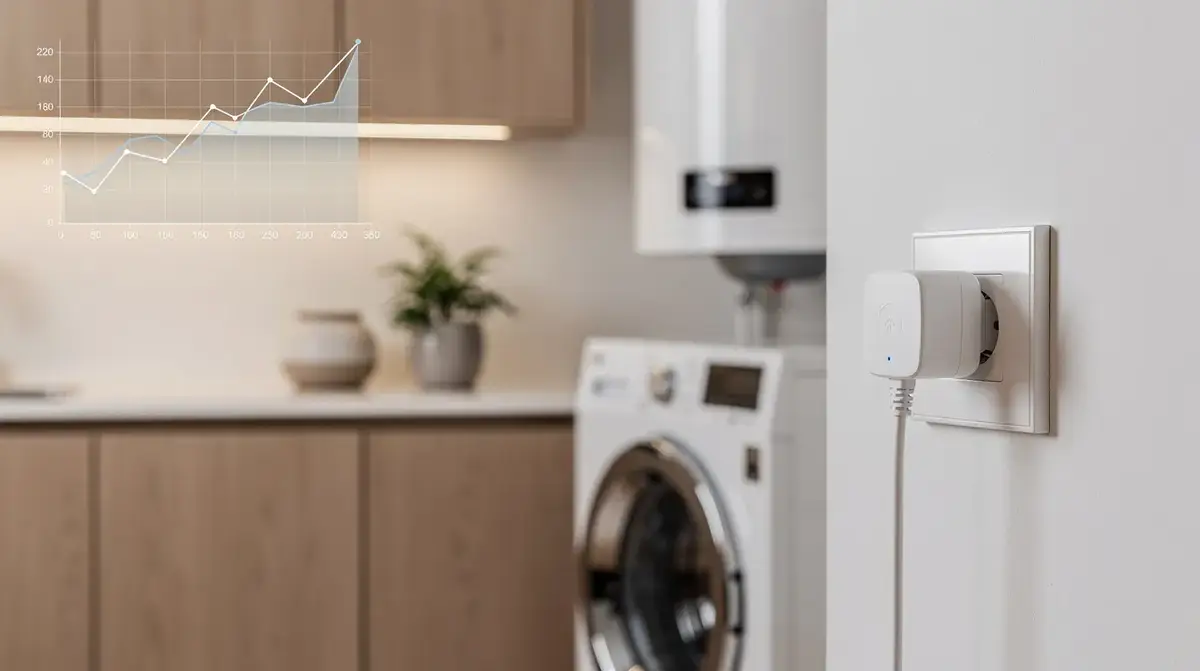
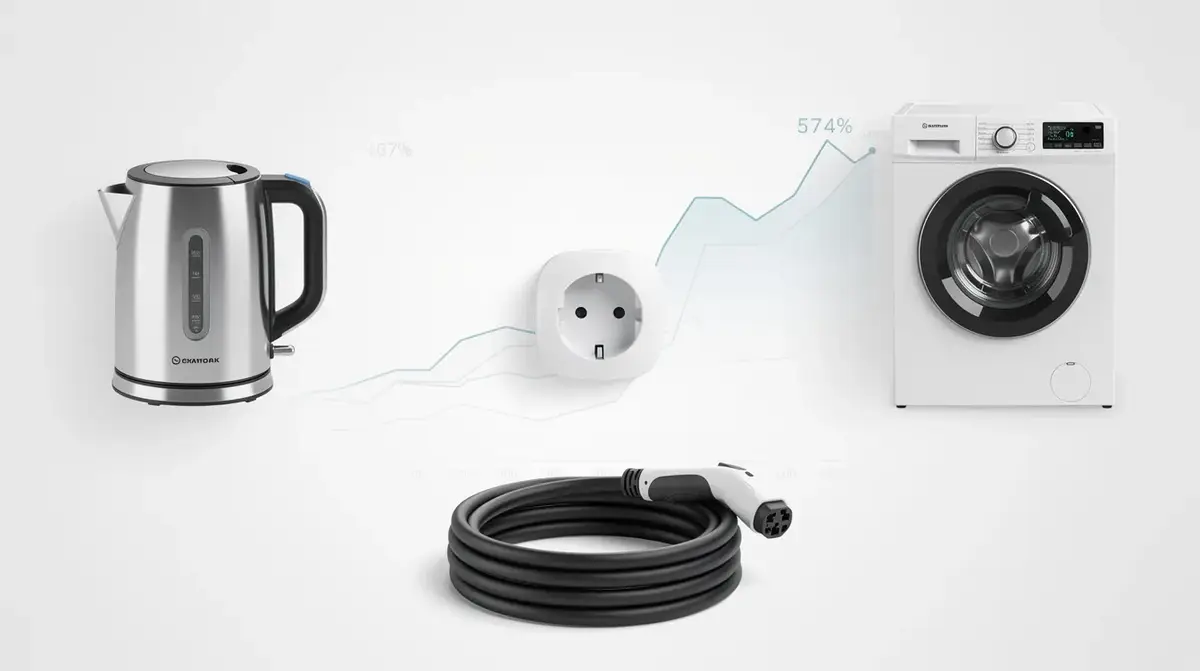
The savings potential is directly proportional to an appliance's consumption and how flexible its schedule is. High-consumption appliances with free-running hours deliver the biggest return on a spot electricity tariff.
Is a Water Heater Really the Best Fit for a Spot Electricity Tariff?
Yes, a water heater is the classic example and often the best starting point for anyone on a spot electricity tariff. A typical home water heater with an 80-150 litre tank uses 1.5 to 3 kWh each time it heats water back up to temperature. That happens several times a day.
Why Is a Water Heater So Well Suited to Automation?
A water heater keeps water hot, meaning it doesn't matter which hour it heats the water in, as long as it's hot before your morning shower. If the water heater warms up at 3am, when electricity is cheapest, and holds the temperature until 7am, you notice no difference at all, just a cheaper bill.
The Spotvolt system can automatically switch the water heater on exactly during the hours when the Nord Pool price is lowest, and off the rest of the time. There's no need to set a timer or check prices every day, automation does it on its own.
Pro tip: Homes with an electric water heater on a spot electricity tariff can save 15-30 euros a month on the water heater alone, using the cheapest night and morning hours. Over a year, that's 180-360 euros.
Is It Worth Automatically Scheduling a Washing Machine and Dishwasher?
Both of these appliances are great candidates, but with a slight difference compared with a water heater. A washing machine uses 0.5 to 2 kWh per wash cycle, a dishwasher around 0.8 to 1.5 kWh. That's less than a water heater, but still enough for the hourly price difference to be noticeable.
What Are the Practical Advantages?
- Washing at night or early in the morning, when electricity is cheaper, saves money every single time.
- A dishwasher can start automatically after dinner, once the price in the following hours is lowest.
- The Spotvolt system's cheapest hours window mode, described on the Spotvolt features page, lets you specify a time range within which the appliance must finish, and automation picks the optimal start time on its own.
The main requirement: the machine needs to be ready to start at any moment, not only "when you switch it on". If you load the washing in the evening and leave the door closed, Spotvolt can switch the machine on much later, at whichever hour is cheapest overnight.
Watch out: Some people don't like the machine running at night because of the noise. In that case, you can set a time window, for example from 5am to 8am, and automation will find the cheapest hour within that range.
Is EV Charging One of the Biggest Winners?
Absolutely, and often the biggest winner of all. An EV battery typically needs 10-60 kWh per charging session, depending on the car and the charging level. Even with a slower home charger (7-11 kW), that means a few hours of charging overnight.
Why Is EV Charging Especially Rewarding on a Spot Electricity Tariff?
Night hours in Latvia more often come with lower Nord Pool prices, frequently 2-5 cents per kWh, while the daily peak can reach 20-30 cents or more. Charging 30 kWh at 3 cents costs 90 cents. Charging it at 20 cents costs 6 euros. The monthly difference is considerable.
The Spotvolt system can switch the charging socket on exactly during the night hours when the price is lowest, and the car will be charged well before morning. No need to check Nord Pool electricity exchange prices every evening and manually decide when to start charging.
EV owners on a spot electricity tariff using Spotvolt automation can save 30-60 euros a month on charging alone, if their car covers 30-50 km a day and charges overnight during the cheapest hours.
Are Electric Heaters and Underfloor Heating Good Candidates?
Yes, but with a nuance. Fixed underfloor heaters and electric heating systems are very high consumers, some draw 1-3 kW per hour. That makes them ideal candidates for using the cheapest hours. However, heating systems usually need to run continuously on cold days, so their flexibility is more limited.
When Do Heating and Spotvolt Work Well Together?
- Shoulder seasons, in spring and autumn, when only a few hours of heat are needed per day, automation can deliver it during the cheapest times.
- Bathroom underfloor heating, usually only needed in the morning and evening, so it can be scheduled for the lowest-price hours.
- Extra heaters in bedrooms, if used for only a few hours, automation can run them during the cheapest window.
A spot electricity tariff paired with a smart plug is like a permanent energy manager in your home, one that never sleeps and never forgets to check prices.
Which Appliances Are Less Suited to Automation?
Not every household appliance benefits from spot electricity tariff automation. It's worth understanding this so you can make smart decisions about what's worth automating.
Appliances with little or no savings potential:
- Fridges and freezers, these need to run continuously, and their consumption is relatively small (50-150 W). They must not be switched off between cheap hours.
- Internet routers and TV set-top boxes, consumption is minimal, and switching them off is inconvenient.
- LED lighting, consumption is so low that the hourly saving is a cent or less.
- Medical devices, should never be scheduled or interrupted automatically.
Rule of thumb: if an appliance draws less than 200-300 W and needs to run on demand rather than on a schedule, automation won't give you a noticeable saving.
Pro tip: Start with one or two high consumers, a water heater and a washing machine. Your first month's bill will show whether the saving is real. Then gradually add other appliances.
What Do Real Monthly Savings Look Like, and How Do You Calculate Them for Your Home?
The exact saving depends on several factors: how much you use each appliance, how big the price difference is in a given month, and how well automation manages to "catch" the cheapest hours. Still, it's possible to give a realistic picture.
A rough example for a family on a spot electricity tariff:
- Water heater (2 kWh/day, shifted to night hours): roughly 10-20 euros a month
- Washing machine (6 washes/week, 1.5 kWh each): roughly 5-10 euros a month
- Dishwasher (7 times/week, 1 kWh each): roughly 3-7 euros a month
- EV (charged 3x/week, 20 kWh each time): roughly 20-40 euros a month
Total: 38-77 euros a month, or 456-924 euros a year, and that's purely from automation, without changing overall consumption, just changing when appliances run.
Watch out: The size of the saving depends on Nord Pool price movements in a given month. In summer, when prices are lower and steadier, the gap can be smaller. In winter, when daily peaks are higher, automation delivers a bigger return.
Pro tip: The Spotvolt dashboard shows real consumption for each appliance, letting you compare exactly what you'd pay without automation versus with it. Switch it on and see for yourself.
How Does the Spotvolt System Make All This Happen in Practice?
Spotvolt is a ready-made solution, a smart plug that connects to your appliances and controls them automatically based on real-time Nord Pool prices for Latvia. You don't need to track prices yourself, set up complicated schedules, or know anything technical.
What Does It Look Like in Practice?
- Get the Spotvolt product and plug it into a socket.
- Connect your appliance (water heater, washing machine, charger) to the Spotvolt plug.
- Choose an automation mode, for example, "cheapest hours" or "price threshold".
- The system tracks prices on its own and switches the appliance on or off according to your settings.
That's it. From that point, automation runs without any involvement from you. You can view your consumption history and price charts in the Spotvolt dashboard at any time.
If your home has an electric water heater, washing machine, dishwasher or EV, and you're on a spot electricity tariff, a Spotvolt smart plug can start saving you money today, with no changes to your appliances or your daily routine. Consider getting the Spotvolt product and start saving this month.