A spot electricity tariff promises lower electricity bills, but for many households the first few months bring disappointment. The bill doesn't drop, appliances run at the wrong time, and tracking prices becomes extra work. The problem is often not the tariff itself, but how people use it. In this article we look at the most common mistakes people make when switching to a spot electricity tariff, and explain how to avoid them so the tariff genuinely pays off.
Why doesn't a spot electricity tariff always cut your bill automatically?
A spot electricity tariff doesn't mean a lower bill by itself, it means the chance to pay less if you use electricity at the right time. That's an important distinction many people miss when they sign the contract.
A fixed tariff bakes in an average price across the whole day. A spot electricity tariff is tied directly to Nord Pool electricity prices, which change every hour. In the mornings and evenings, when everyone is cooking and using appliances at the same time, prices are higher. At night and around midday, they're often two or even three times lower. If you keep living exactly as you did on a fixed tariff, a spot electricity tariff can even end up more expensive.
Which appliances have the biggest effect on the result?
Not all appliances matter equally. The biggest savings come from:
- Electric water heaters - water heating can easily happen at night
- Washing machines and dishwashers - their cycles last 1 to 3 hours and can be scheduled flexibly
- Electric heaters and infrared film heating panels - they can store heat during cheap hours
- EV charging - charging the battery at night can save a significant amount every month
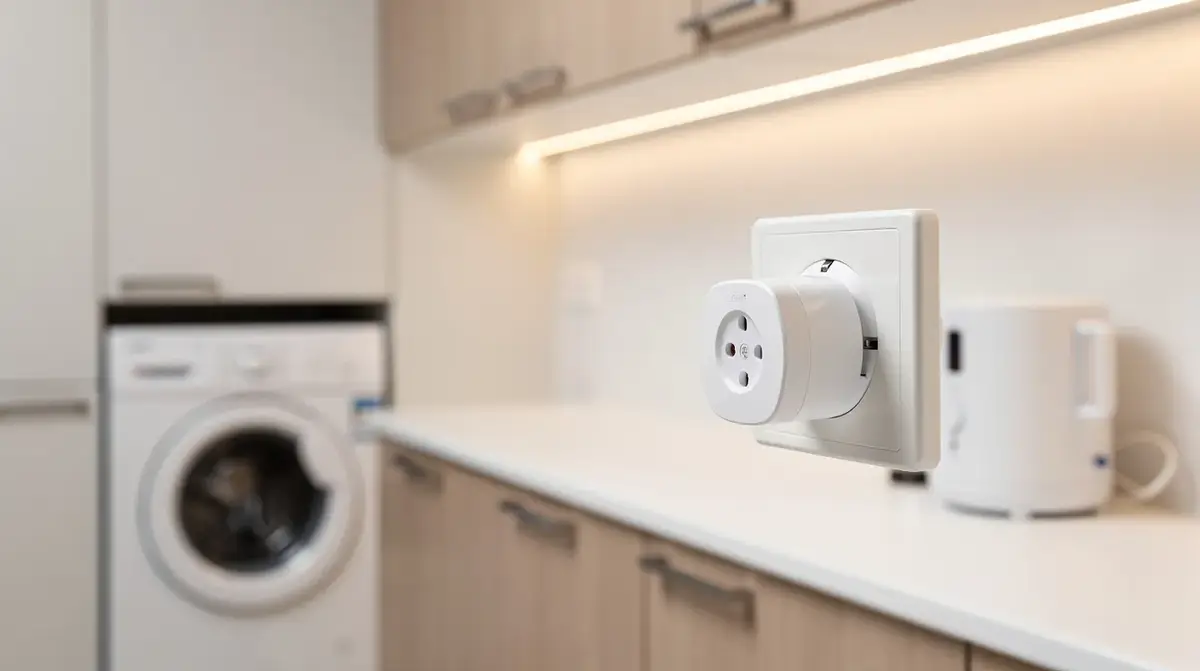
Can you really track prices manually every day?
In theory, yes. In practice, no. This is one of the biggest mistakes: people assume that checking prices occasionally will be enough, or that they'll "remember" to switch the water heater on in the middle of the night.
The reality is different. Nord Pool prices for the next day are published every day at around 13:00. They change every hour. Every day. All week long, including Sundays and public holidays. To actually make use of the cheapest hours, you would need to:
- Check the next day's price chart every day
- Work out which hours have the lowest price
- Manually switch appliances on and off at the right time
- Repeat this every morning, evening and night
For most people, this process takes too much time and nerves. After a few weeks the enthusiasm fades, and appliances go back to running on the old schedule. The savings disappear along with the motivation.
Pro tip: Automation that picks the cheapest hours for you every day saves not just money, but also time and mental energy. That's exactly why a Spotvolt smart plug is so practical for everyday use.
Why isn't building your own smart plug the right solution?
Some technically minded people try to build their own home automation solution, and often quickly realise it takes far more time and knowledge than they first thought.
The practical problem is simple: even if everything works at first, a system like this needs regular maintenance, updates and troubleshooting. If something breaks on a Sunday evening, the water heater doesn't warm up, and there's no one to turn to. You end up back at the very thing you wanted to avoid, manual control, only now with extra complications.
A ready-made, purpose-built product like Spotvolt exists precisely so an everyday user doesn't have to solve technical problems. Setup takes a few minutes, and the system runs reliably without any extra worry.
A spot electricity tariff gives you an opportunity. Automation turns that opportunity into real savings every month, without any daily manual effort.
Does it matter knowing when an appliance runs and how much it uses?
Absolutely. One of the most common mistakes is that people don't measure the results. Without concrete data, there's no way to know whether a changed habit is actually affecting the bill.
For example, many households are surprised to learn that their water heater uses 60 to 80 kWh a month, or more. If you shift that consumption to night hours at EUR 0.05/kWh instead of EUR 0.15/kWh, the saving over a month can reach EUR 6 to 10 from that one appliance alone. Over a year, that's EUR 70 to 120.
What does visibility into consumption give you?
- Know exactly how much each appliance uses
- Check whether the automation is working as planned
- Compare bills before and after the changes
- Adjust settings to get better results
Careful: If your smart plug doesn't show real consumption data, you won't be able to gauge your savings or notice in time if an appliance is running inefficiently or has broken.
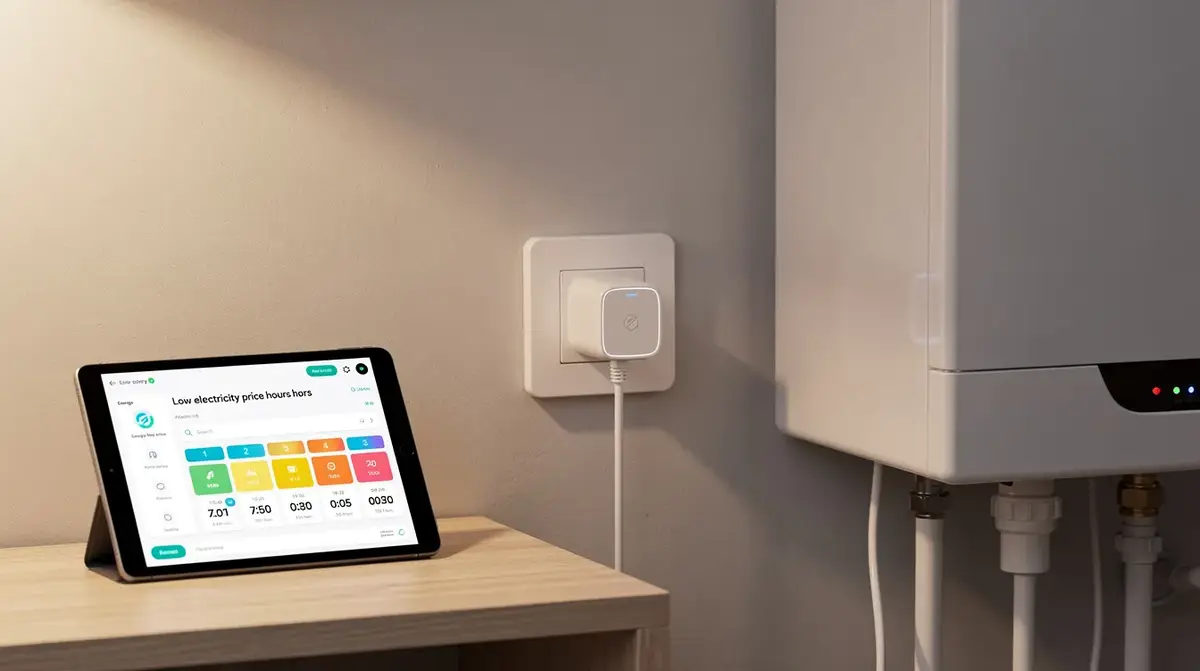
Does the same automation setting suit every home?
No, and this is a mistake many people make, setting up one simple schedule and forgetting about it. Different appliances and different homes need different approaches.
Let's look at a few real scenarios:
Water heater
For most households, it's enough for the water heater to run during the 3 to 4 cheapest night hours. Water holds its heat for several hours, so you won't even notice the difference during the day. Cheapest Hours mode works well here, automatically finding the optimal time each day.
Washing machine
Here the situation is a bit different, the cycle can't finish too late, or the washing starts to smell. That's why Cheapest Hours Window suits it better, letting you set the machine to switch on at the cheapest moment, but only within a set period, for example from midnight to 7:00.
EV charging
A car is usually left to charge overnight, so automation that looks for the cheapest night hours works very well here. If the car needs a full charge by morning, you can also set a minimum number of hours.
Pro tip: Use different Spotvolt modes for different appliances. Cheapest Hours suits a water heater, Cheapest Hours Window suits a washing machine, and Price Threshold suits a seasonal heater. Each appliance can run by its own rules.
Are there times of year when a spot tariff is especially good or bad value?
Yes, and these differences can be very significant. Without understanding the price dynamics, you can end up with the wrong expectations.
Because of wind generation, in Latvia and the Baltics as a whole, night prices are often significantly lower than the daytime peak. In the winter months, when demand is high, the price difference can reach 5 to 10 times. That means a household with a large water heater and an electric car could see automation save EUR 40 to 60 a month in winter.
In summer, when solar power flows into the grid, midday prices are often very low, sometimes even negative. That's a good time to set up Price Threshold mode, which only switches an appliance on when the price drops below a level you set.
Price dynamics change with every season. The best strategy is automation that adapts itself to the current price chart every day, rather than a fixed schedule set once a year.
Is complicated setup what puts people off?
Unfortunately, yes. Some people on a spot electricity tariff never reconfigure a single appliance, because they assume automation is "too complicated" or "only for tech enthusiasts". That's a mistake, because these days it isn't.
Setting up Spotvolt looks like this:
- Connect the smart plug to the mains
- Plug your appliance into the Spotvolt smart plug
- Open the Spotvolt dashboard and log in
- Choose your preferred mode, cheapest hours, price threshold or another
- Done, from here the system runs automatically
No technical experience is needed, there's no software to install, and you don't need to understand how the electricity market works. Everything is available through a simple, clear interface.
Careful: If an automation solution takes more than 15 minutes to set up, or needs regular reconfiguring, it's no longer "smart", it's extra work for you. The right solution runs quietly in the background without your day-to-day involvement.
How do you know if you've chosen the right approach?
The right approach is when you no longer think about electricity prices day to day, but your bill is lower every month. That's a clear and simple goal.
To assess whether you're making the most of your spot electricity tariff, ask yourself:
- Are my high-consumption appliances running during the cheapest hours, or still during the daytime peak?
- Do I have to track prices myself every day, or does automation do it for me?
- Can I see how much each appliance uses, and whether the automation is working?
- Has my bill actually dropped since switching to a spot electricity tariff?
If the answers are no, you're most likely not yet using the potential of your spot electricity tariff. A good starting point is to look at what Spotvolt features are available and which modes would suit your household.
Pro tip: Start with one appliance, a water heater for example. Set up the automation, wait a month, and compare the bill. One successful result usually provides the motivation to automate the rest of your appliances too.
A spot electricity tariff only pays off if consumption is shifted to the cheap hours. Manually tracking prices doesn't work in the long run. Automation that picks the optimal time for each appliance every day is the only way to actually get the most out of a spot electricity tariff without extra effort.
If you have a spot electricity tariff and a water heater, washing machine or electric car, a Spotvolt smart plug pays for itself within the first few months. Take a look at the Spotvolt product, choose the right solution for your household, and let the automation do its job, every day, without your involvement.