Your electricity bill lands in your inbox or postbox every month, but do you actually understand what it means? If you have considered switching to a spot electricity tariff, or you have already switched but are not seeing the savings you expected, this article is for you. We will explain which lines on the bill matter most, what "hourly electricity price" actually means, and how to tell whether a spot tariff genuinely pays off for your household, or whether you are better off on a fixed rate.
What Does My Electricity Bill Actually Show?
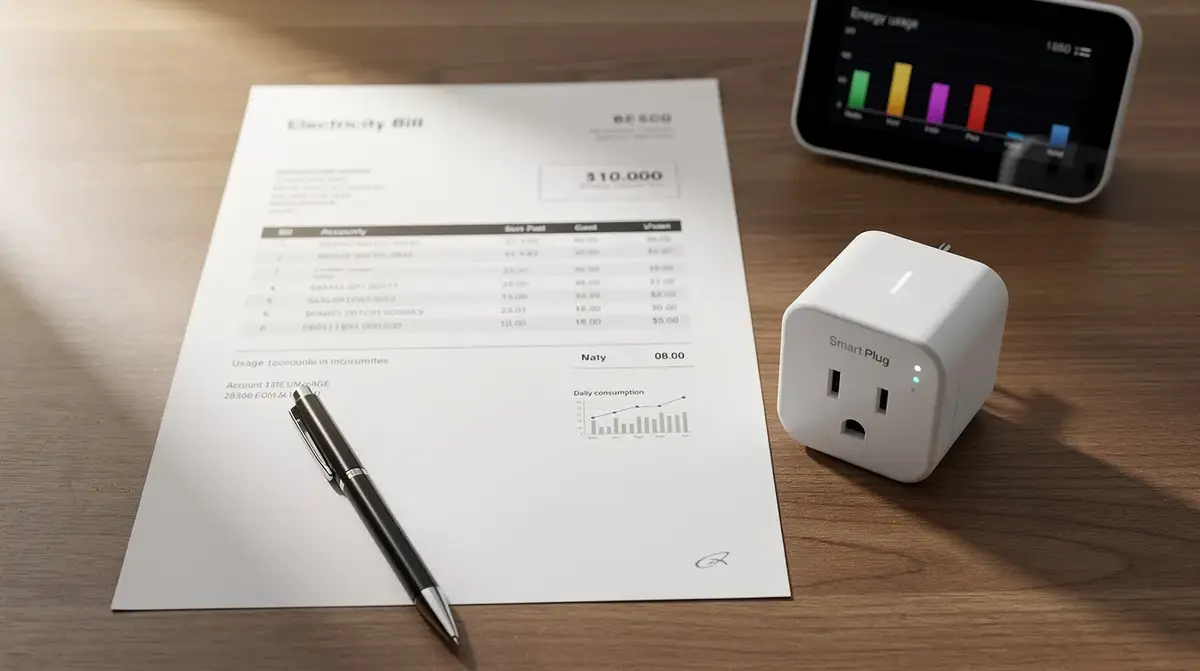
An electricity bill is not just one total, it is made up of several parts, each with a different role. To work out whether a spot tariff pays off for you, you first need to know what you are paying for.
A typical household electricity bill in Latvia usually includes these main line items:
- Electricity consumption (kWh): the amount for the electricity you actually used. This is the only part that changes depending on your tariff type.
- Distribution network service: a fee for maintaining the grid, charged regardless of how much electricity you use. This part does not change with your tariff type.
- Mandatory procurement component: a state-set levy that funds support for renewable energy.
- VAT: value-added tax on the whole amount.
The key takeaway is that a spot electricity tariff only affects the first line item, the charge for electricity actually consumed. Everything else stays the same no matter which tariff you choose. So when comparing your bill "before" and "after" switching to a spot tariff, look specifically at the electricity consumption line, not the total amount.
What Does "Hourly Electricity Price" Mean and Where Do I Find It?
A spot electricity tariff means the price for each kilowatt-hour changes every hour, and these prices are set on the Nord Pool electricity exchange, where producers and buyers trade electricity across the Nordics and the Baltics.
In other words, at 3am electricity might cost EUR 0.05/kWh, while at 6pm it could cost EUR 0.20/kWh or more. That price gap is exactly the opportunity smart automation uses to shift a water heater, washing machine or other appliance to the cheapest hours.
Where Can I Check Current Electricity Prices?
You can check current Nord Pool electricity exchange prices for Latvia free of charge on the Spotvolt site. It shows you what electricity costs right now and what prices are expected for the next 24 hours. If your electricity supplier provides a detailed bill with hourly consumption, you can compare it against spot prices and see exactly what each hour of use cost you.
Pro tip: Ask your electricity supplier for a detailed hourly consumption report, or check it in your online customer portal. With this data you can work out precisely how much money you would have saved if most of your consumption had been shifted to night-time hours.
How Do You Compare a Fixed Tariff with a Spot Tariff on Your Bill?
To fairly judge which tariff works out better for you, you need two figures: the average spot electricity price over the period, and the fixed tariff rate your supplier offers.
Here's a worked example for a family using 400 kWh a month:
- Fixed tariff: EUR 0.18/kWh x 400 kWh = EUR 72 a month for consumption.
- Spot tariff without automation: if the average spot price is EUR 0.14/kWh, that's EUR 56 a month, a saving of around EUR 16.
- Spot tariff with automation: by shifting the water heater and washing machine to the cheapest hours, the effective average price can drop to EUR 0.10-0.11/kWh, pushing the saving up to EUR 28-32 a month, or EUR 336-384 a year.
Of course, real figures vary depending on the season, your consumption structure and which appliances you can shift to cheaper hours. Still, this calculation shows the main principle: a spot tariff on its own delivers part of the saving, but combined with automation the effect can be considerably larger.
A spot tariff on its own means a lower average price compared with a fixed rate, but the biggest savings come when appliances actually run during the cheapest hours, not when it happens to be convenient or when you remember to switch them on.
Which Signs on Your Bill Show a Spot Tariff Is Worth It?
There are specific indicators that tell you whether switching to a variable electricity tariff has been, or would be, worthwhile for you. Look for these signs on your bill and in your household.
High-consumption appliances
If your home has a water heater, washing machine, dishwasher, electric heater, or you charge an electric vehicle, you have something to shift. These appliances use the most energy, and they are exactly the ones that can run during the night hours when the price is lowest. The higher their combined monthly consumption, the bigger the potential saving.
Consumption at night or while you're away
If you're happy to let the water heater warm up at 2am, or run the washing machine early in the morning instead of in the evening, a spot tariff will bring you a real benefit. If your routine does not allow you to shift consumption timing, the benefit will be smaller.
The consumption line makes up a large share of your bill
If the electricity consumption charge (the kWh cost) makes up 50-60% or more of your total bill, the advantages of a spot tariff are more noticeable. If most of your cost is the distribution service (for example, low consumption in a single-person flat), the saving will be proportionally smaller.
A water heater that warms up during the cheapest hours every night can save more over a year than the cost of buying a new appliance.
Watch out: When switching to a spot tariff, electricity suppliers sometimes add an extra margin or service fee on top of the spot price. Read the contract terms carefully, your calculation needs to include the whole monthly charge, not just the spot price itself.
Which Signs Suggest a Spot Tariff Might Not Suit You?
A spot electricity tariff does not suit everyone equally. There are situations where a fixed tariff might be the more sensible choice, or where the saving will be minimal.
- Very low overall consumption: if you use less than 100-150 kWh a month, the absolute saving in euros will be small, even if the relative price difference is large.
- No high-consumption appliances: if your home has no water heater, heater or large appliance to shift to cheaper hours, the savings potential is reduced.
- Consumption timing cannot be changed: if all your electricity use happens in the evenings, when prices are usually high, a spot tariff could cost more than a fixed one.
- Cold winter periods: in December and January, spot prices in Latvia can rise sharply. Even so, automation that tracks price forecasts can help in this situation too. You can read more about it in our article on whether a spot electricity tariff is worth it in winter.
Why Doesn't Manually Tracking Prices Work Long Term?
In theory, you could check the Nord Pool price chart every day and decide for yourself when to switch on the water heater or start a laundry cycle. In practice this approach fails, not because people are lazy, but because everyday life is busy and prices change every hour.
Many people start with good intentions: they check prices in the first week, forget in the second, and stop checking altogether by the third. The result is that the water heater still warms up in the evening, when electricity is more expensive, even though you have already switched to a spot tariff and the price keeps changing.
This is exactly where Spotvolt automation does its job. It tracks prices and makes the decision to switch on and off every hour, without any action from you. You set the rules once, and the system takes care of the rest.
Pro tip: Spotvolt offers several automation modes for different situations. For example, the "cheapest hours" mode automatically switches an appliance on during the part of the day when electricity is cheapest. You can see all the available Spotvolt features on their own page. Our article on which automation mode suits each appliance is also worth a read.
How Do You Calculate Your Own Savings Potential?
A concrete calculation will help you make an informed decision. Here's a practical step-by-step approach.
Step 1: Work Out Your Consumption Structure
Look at your bills from the last 3-6 months and calculate your average monthly kWh. Then work out how much of that is used by manageable appliances: a water heater (typically 80-150 kWh a month), a washing machine (20-40 kWh), a dishwasher (15-25 kWh), or EV charging (30-150 kWh depending on how much you drive). For more real household savings examples, read our article on how much a family saves on a spot electricity tariff.
Step 2: Compare the Average Spot Price with the Fixed Rate
Check what your current fixed price is, or what your supplier's spot tariff with markup costs. Then compare it with the average Nord Pool price over the last month, you can find this information on the Nord Pool electricity exchange prices page.
Step 3: Estimate Your Manageable Consumption
If your manageable appliances add up to, say, 150 kWh a month, and you can shift them to hours that are EUR 0.08-0.10/kWh cheaper, the saving from that portion alone is EUR 12-15 a month, or EUR 144-180 a year. Add in the rest of your consumption benefiting from the lower average spot price, and the total effect can reach and exceed EUR 200-400 a year.
Pro tip: If your calculation shows that your manageable consumption is at least 100-150 kWh a month, a Spotvolt smart plug pays for itself within a few months. You can see specific product options on the Spotvolt products page.
Watch out: Savings estimates are approximate, since spot prices change every month. In winter, prices tend to be higher and more volatile, meaning both a greater risk of paying more without automation, and a bigger saving with it.
What Should Your Next Bill Show If the Automation Is Working?
After setting up Spotvolt, savings are not always obvious on the very first bill, but there are signs that show the system is working correctly.
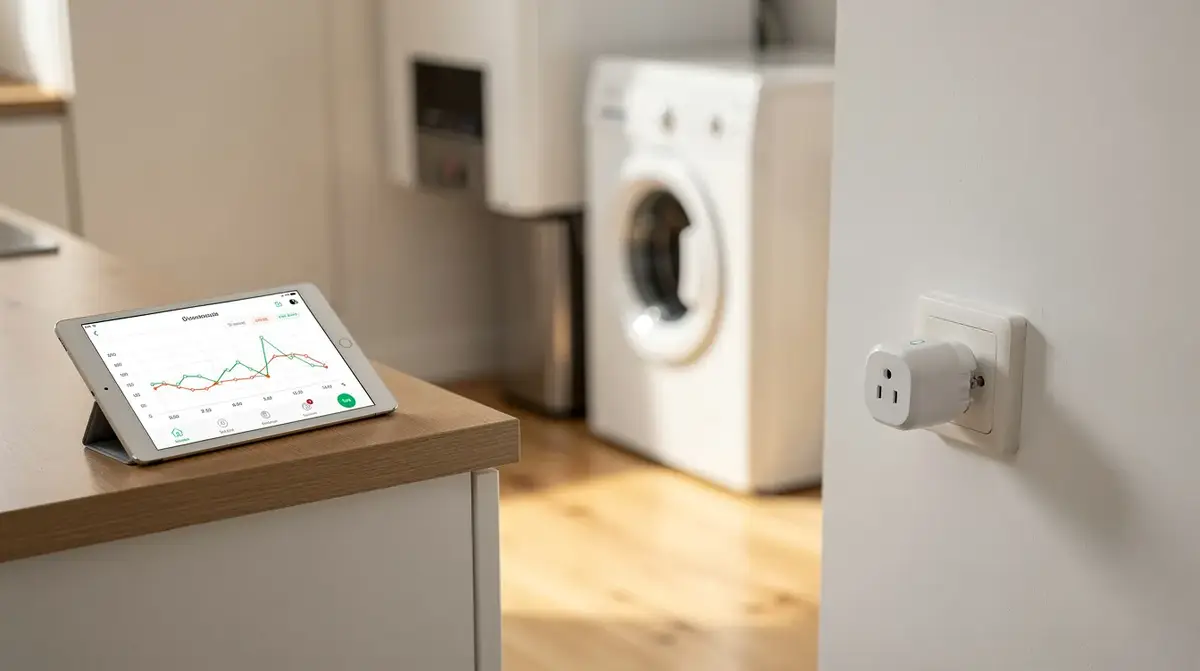
- Consumption visible in the dashboard: the Spotvolt dashboard lets you see when an appliance ran and for how long. If the water heater switches on at night or early morning rather than in the evening, that's the right signal.
- Consumption shifting to lower-price hours: compare the appliance's running time against the Nord Pool price chart. Most of its runtime should fall within low-price hours.
- A smaller consumption line on your bill: after 2-3 months, compared with the same period the previous year, the electricity consumption line on your bill should be smaller or at least not have grown, even if prices overall have changed.
The Spotvolt system stores your consumption history, so you can always open the dashboard and see how an appliance has behaved over time. That makes the saving not just something you feel, but something you can see in numbers.
Your bill is only part of the picture. To fully understand your savings, you need to compare when your appliances ran against the spot price chart, and that is exactly what the Spotvolt dashboard lets you do, with everything laid out in one place.
How Do You Get Started, and Is It Complicated?
Getting started is considerably simpler than most people expect. The Spotvolt smart plug plugs into a wall socket, you connect your appliance to it, it connects to your home Wi-Fi, and setup is done through a simple web interface. There's no extra hardware to install, no wiring work needed, and no need to understand how spot prices work.
First steps:
- Choose the appliance you want to automate, a water heater, washing machine or another high-consumption device.
- Plug the Spotvolt smart plug in between the socket and the appliance.
- Log into the dashboard and choose the automation mode that suits you best.
- The system starts running, and saving, from the next day.
All the available options, from choosing your cheapest hours to setting a price threshold, are described on the Spotvolt features page.
If a large share of your bill is manageable consumption, a water heater, washing machine, heater or EV, a spot tariff combined with automation can deliver EUR 150-400 in savings a year. Spotvolt achieves this without any daily manual work on your part. You can view the product and get started on the Spotvolt products page.